


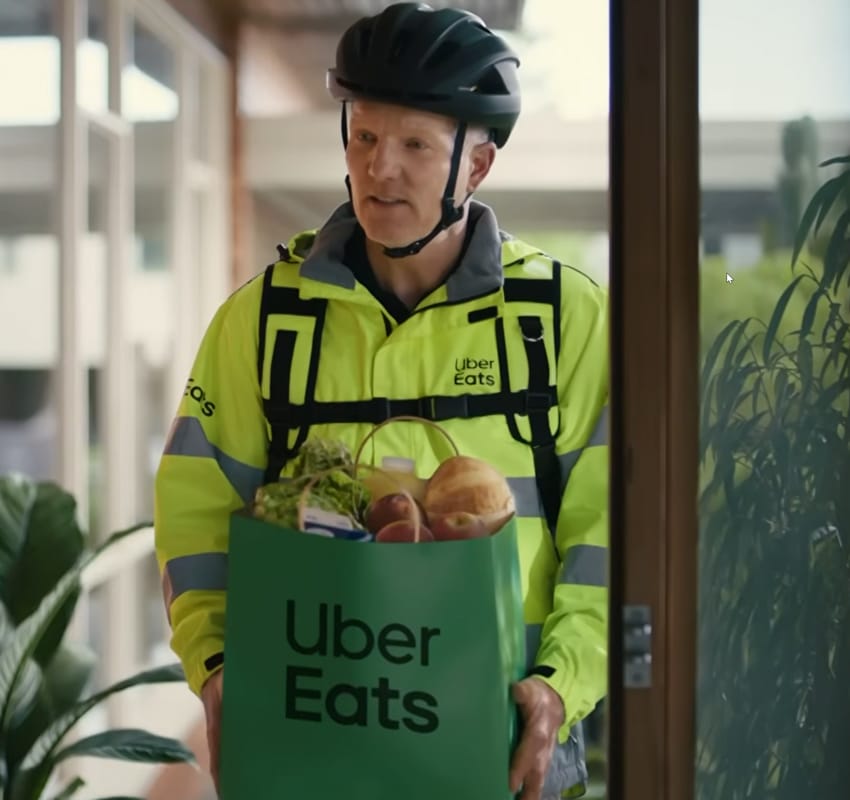
Uber Eats – Jim Courier, Courier
If you live in Australia, it would have been hard to miss this video ad from Uber Eats over the past few weeks. Airing across Channel 9 as part of the Australian Open broadcast, and running extensively online and across social platforms, Jim Courier, Courier quickly became one of the most visible food delivery campaigns of the summer.
Uber Eats is a major part of Uber’s business, representing a key driver of the company’s global operations and market strategy. As one of the largest food delivery services worldwide, Uber Eats competes with other major players such as DoorDash, Grubhub, Deliveroo, and Just Eat Takeaway.com, highlighting its significant role in the food delivery market.
From prime-time television to mobile feeds, the campaign achieved genuine cultural saturation during one of the biggest moments on the Australian sporting calendar. Importantly, it did so without leaning on the usual food advertising playbook. Instead of appetite shots and speed claims, Uber Eats delivered a mockumentary-style video ad built on sporting nostalgia, cultural insight, and understated humour.
This is a video ad review of why the campaign worked, how it broke category conventions, and what it signals for the future of food delivery advertising.
A Sports Mockumentary Disguised as a Food Delivery Ad
The opening frames immediately set a different tone. Grainy archival tennis footage from the 1990s fills the screen, presented in a 4:3 aspect ratio more commonly associated with classic sports broadcasts than modern advertising. A serious newsreader announces Jim Courier’s retirement, grounding the story in the language of elite sport.
It is a deliberate pattern interrupt. By borrowing the visual codes of a sports mockumentary, the ad earns attention before the brand ever appears. For tennis fans, the nostalgia is instant. For everyone else, the tone signals authenticity and credibility, making viewers lean in rather than tune out.
The Insight at the Heart of the Campaign
At the core of Jim Courier, Courier is a simple but powerful insight. Jim Courier’s surname is not just a name. It is a job description. The campaign leans fully into the idea that his post-tennis career as a courier was always inevitable, hiding in plain sight.
Crucially, the idea is treated with complete seriousness. Through straight-faced interviews and revisionist archival footage, the film builds a narrative that Jim’s “true calling” was written long before he left the court. The humour unfolds gradually, allowing the audience to discover the joke rather than having it explained to them.
This restraint is what elevates the work. The brand trusts viewers to connect the dots, and that confidence is felt throughout the film.
A Clever Use of Humour That Feels Unmistakably Australian
A large part of why Jim Courier, Courier works so well is its instinctive understanding of Australian humour. The joke is not loud, over-explained, or reliant on spectacle. Instead, it is built on understatement, self-awareness, and a quiet confidence that the audience will get it.
Australians tend to respond best to humour that is dry, observational, and slightly absurd. This campaign leans into that sensibility from the outset. The idea that a former world number one tennis player was always destined to become a courier is delivered with complete seriousness, allowing the absurdity to do the heavy lifting. The mockumentary tone never winks too hard at the camera, which is precisely why the joke lands.
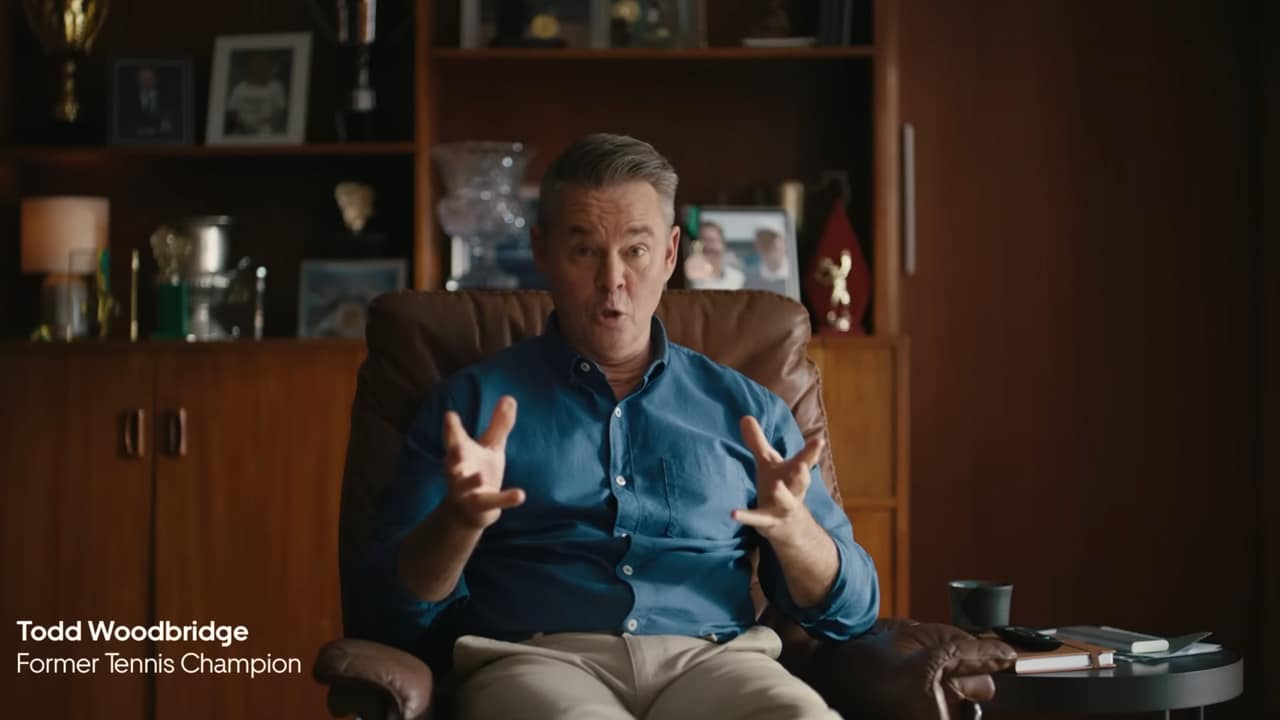
The visual wordplay featuring Pat Rafter and Todd Woodbridge is a perfect extension of this approach. Rafter drifting past on a literal raft, and Woodbridge holding a wooden bridge, are classic examples of humour that is simple on paper but elevated through confident execution. These moments are not explained or highlighted. They are allowed to pass by almost casually, trusting the audience to make the connection themselves.
There is also an important cultural nuance at play. Sporting heroes in Australia are admired, but rarely pedestalised. They are embraced most when they are willing to laugh at themselves. Seeing well-known tennis figures lean into gentle self-parody without ego taps directly into that national preference for humility over hype.
Crucially, the humour never undermines the brand. It reinforces it. By leaning into playful silliness, Uber Eats signals confidence in its platform and its place in culture. The brand does not need to shout its message. It is comfortable enough to let the joke breathe, knowing that memorability and goodwill will follow.

Casting That Feels Earned, Not Endorsed
Jim Courier anchors the campaign with a performance that is self-aware without tipping into parody. His willingness to play along gives the story warmth and credibility. He is joined by fellow tennis legends Todd Woodbridge and Pat Rafter, whose appearances add cultural weight and authenticity.
The casting never feels like celebrity endorsement for its own sake. These are people with shared history, speaking the language of elite sport. Their chemistry makes the mockumentary format believable, which is essential for the humour to land.
Designed to Work With or Without Sound
One of the strongest aspects of this video ad is its sound-off effectiveness. Even without dialogue, the story is clear. Jim cycling through the city with an Uber Eats delivery bag, archival footage digitally altered to include modern delivery gear, and the literal interpretations of familiar surnames all reinforce the central idea.
In a world dominated by Connected TV, mobile viewing, and social feeds, this kind of visual clarity is critical. The ad is designed to perform across formats and placements without sacrificing creative ambition.
Built for the Rhythm of Tennis Broadcasting
Beyond the hero 60-second video ad, Uber Eats and its agency were clearly thoughtful about how the campaign would live within the natural rhythm of tennis broadcasts. A suite of shorter 30-second and 15-second cutdowns were developed to complement the long-form creative, ensuring the idea worked just as effectively in shorter, high-frequency placements.
These shorter spots were perfectly suited to the structure of tennis coverage, where brief breaks naturally occur during change of ends, between games, and during quick broadcast transitions. Rather than feeling like interruptions, the cutdowns slotted neatly into these moments, delivering the joke quickly and clearly before returning viewers to the action.
Alongside the video assets, the campaign was supported by a series of static images used across digital and social environments. These visuals extended the same playful logic, featuring Jim Courier in delivery mode and reinforcing the visual puns introduced in the film. Together, the mix of hero video, short-form cutdowns, and static creative created a cohesive system designed to maintain consistency and memorability across touchpoints.
Reaction From Talent and Brand
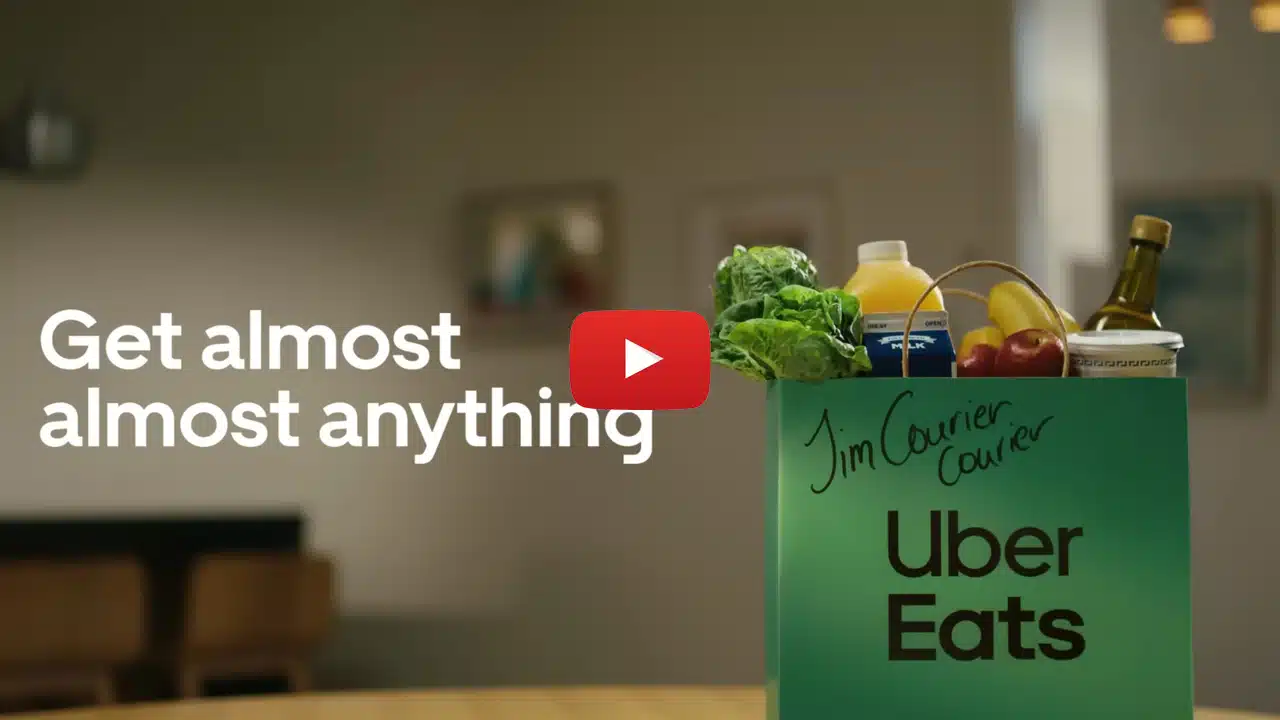
From the brand side, Uber Eats Australia framed the campaign as a deliberate balance between fun and platform consistency. The Australian Open was positioned as a moment to connect with fans beyond the court, using familiar faces and humour to extend the Get almost almost anything platform in a way that felt entertaining, distinctive, and unmistakably Uber Eats.
The simplicity of the idea was also a key theme, with the brand noting that it was surprising the connection had not been made earlier and that there really is something in a name. Importantly, the work was designed to remind audiences that Uber Eats is about far more than meals. Uber Eats allows users to order fast food, local favorites, groceries, fresh produce, and household essentials via its app or website.
From the talent side, Jim Courier reflected on the parallels between elite sport and delivery work, describing the rhythm of reading streets, timing movements, and staying calm under pressure. He noted that stepping into the role woke up a part of him that still loves a challenge, a sentiment that mirrors the narrative arc of the campaign itself.
As the tournament progressed, the ad became a regular talking point among tennis fans, with audiences recognising Courier in public and referencing the campaign across social platforms, reinforcing its cultural cut-through.
Brand Strategy and Agency Craft
The creative was developed by Special Group, an Australian independent agency with its roots in Sydney with a presence across Australia and New Zealand. The agency has built a reputation for culturally fluent, idea-led work that travels well beyond local markets, particularly in sport, entertainment, and brand platforms designed to evolve over time.
Special Group has worked closely with Uber Eats for several years, particularly around major sporting moments such as the Australian Open. That ongoing relationship shows in the confidence of this execution. Rather than chasing short-term attention or reinventing the brand each season, the agency continues to stretch the Get almost almost anything platform in ways that feel fresh while remaining instantly recognisable.
Choosing a mockumentary format over traditional food visuals reflects a deep understanding of both the brand and the audience. It signals trust in the platform, trust in the talent, and trust that viewers are smart enough to engage with humour that is understated rather than over-explained. This kind of creative restraint is often only possible when a brand and agency share a long-term vision.
The result is a campaign that feels playful and cheeky on the surface, yet strategically disciplined underneath. It reinforces Uber Eats’ breadth and relevance while allowing the brand to entertain rather than instruct. More importantly, it demonstrates how a strong agency partnership can turn a simple insight into a piece of work with genuine cultural impact.
Why This Video Ad Stands Out
Most food delivery advertising competes on speed, convenience, or price. Jim Courier, Courier competes on memorability. It reframes delivery as something woven into identity and everyday life, rather than a purely transactional service.
By applying the seriousness of elite sport to an everyday delivery job, Uber Eats elevates the role of the courier while reinforcing the breadth of what can be delivered. The platform message is present throughout, but it never overwhelms the story.
Key Takeaways From This Video Ad Review
🍔 Food delivery advertising does not always need food as the hero to be effective.
🎥 Borrowing formats like mockumentary from outside the category can dramatically increase stopping power.
📖 Humour grounded in cultural insight builds stronger audience connection.
🌟 Celebrity casting works best when talent is self-aware and contextually relevant.
🚀 Clear visual storytelling ensures impact across sound-on and sound-off environments.
📺 Designing creative around broadcast rhythms helps ads feel native rather than interruptive.
⏱️ Shorter cutdowns can reinforce a hero idea without diluting the core insight.
🧠 Treating audiences as intelligent participants increases memorability and goodwill.
🎾 Aligning creative with major cultural moments amplifies relevance and reach.
🔁 Long-term platforms allow brands to evolve ideas without starting from scratch.
Final Thoughts
In my opinion, this has been a very successful campaign by Uber Eats. They have gained a wide variety of organic coverage paired with paid placements that kept Uber Eats top of mind during the summer of tennis. The campaign felt culturally relevant, strategically sound, and genuinely entertaining.
So much so that I do not believe this will be the last time we see Jim Courier and Uber Eats pairing up. I predict a version of this concept could easily emerge around the US Open. Who knows.