


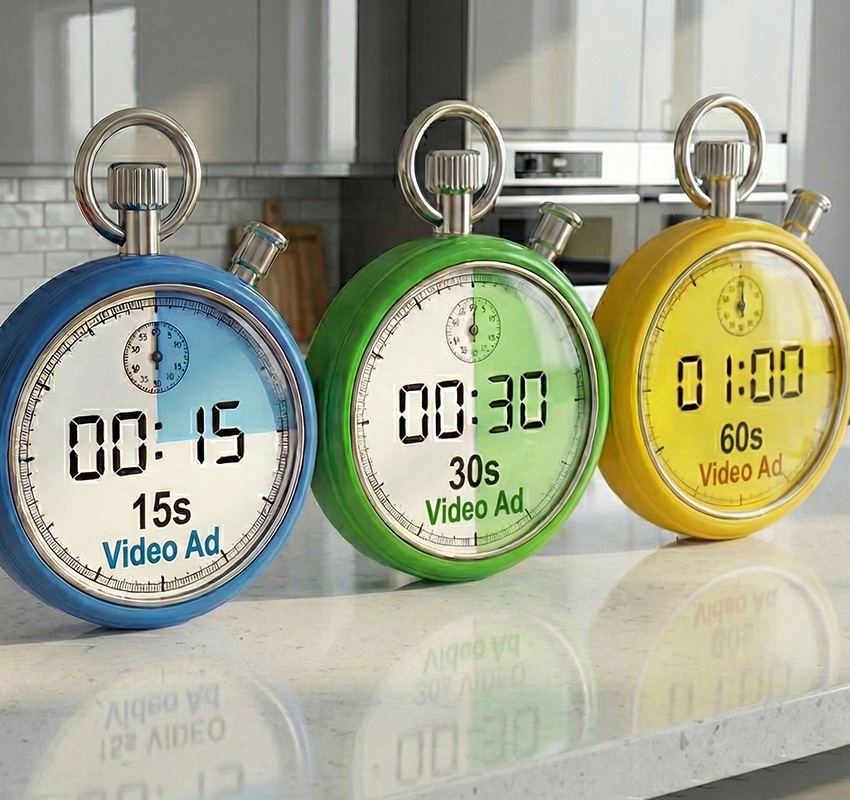
What Is the Best Video Ad Duration?
Video advertising is now at the heart of every successful marketing strategy. It offers brands a dynamic way to connect with their target audience and stand out in a crowded digital landscape. As social media platforms like YouTube, Facebook, and LinkedIn continue to dominate how people consume content, video ads have become an essential tool for companies looking to promote their products, services, and brand story in a format that’s both engaging and memorable.
Creating video ads allows businesses to showcase their unique value, highlight new products, and build brand awareness in a way that static images or text simply can’t match. The immersive nature of video content helps brands make a lasting impression, driving higher engagement and increasing the likelihood of conversions. Whether you’re launching a new product, sharing your company’s story, or simply looking to boost your presence on social media, video advertising offers a flexible and powerful way to reach more people and grow your business.
By integrating video ads into your marketing strategy, you can target specific audiences across multiple platforms, tailor your message for maximum impact, and measure results in real time. The benefits are clear: increased brand awareness, stronger engagement, and a direct path to higher conversions. For food, beverage, and CPG brands, video advertising is a proven way to engage customers where they spend their time online, on mobile, and across every major social media channel.
Key Takeaways
- Creative quality matters more than video length. Strong ideas, clear messaging, and tight execution determine success across all durations, while weak creative fails regardless of runtime.
- Each video duration serves a specific role and environment. Six seconds works as a fast mobile reminder, 15 seconds delivers a minimum viable story, 30 seconds offers the best balance of scale and storytelling, and 60 seconds provides the deepest emotional impact where placements allow.
- For CTV and premium streaming, 30 and 60 seconds perform best. These formats align with lounge-room viewing behavior, legacy TV standards, and viewer expectations, making them the most effective choices for clarity, impact, and storytelling.
Why Video Ad Duration Matters Online
Creative agencies produce multiple video ad lengths because each duration serves a different purpose and fits a different environment. A 6, 15, 30, or 60 second cut behaves very differently when viewed in online video, programmatic instream, CTV, or Amazon Prime Video in the lounge room. Ad formats, placements, or styles can also vary depending on the platform, device, or viewing context. The environment shapes attention, mindset, and expectation, which means the same idea can feel fast in one setting and perfectly paced in another. While lengths vary, the real test is whether the creative hits, works, and connects with the viewer at that moment. If the idea is strong, it will adapt across multiple durations. If the idea is weak, no duration will save it. In premium environments like CTV and Amazon Prime Video, viewers expect clarity, pace, and relevance, so the creative must earn attention regardless of how long the ad runs.
Why Great Creative Matters More Than Duration
Before choosing lengths, placements, or versions, the most important factor in any video campaign is the creative itself. To maximize effectiveness, it’s essential to focus on key aspects such as messaging, target platform, and content quality. A great idea will travel across 6, 15, 30, and 60 second cuts because the message is clear, the story is focused, and the viewer understands the point instantly. Weak creative will fail in every length, even in premium lounge room environments like CTV and Amazon Prime Video where viewers are relaxed and more willing to watch.
Only compelling creative will make the viewer feel something, remember something, or take action. It decides whether the viewer stays with the story, or stop the ad. In programmatic video, strong creative cuts through cluttered environments. In CTV, strong creative feels natural within long form entertainment. On Amazon Prime Video, strong creative earns attention on the biggest screen in the house.
Duration plays a role, but only after the idea is solid. Clear messaging, strong branding, relatable storytelling, and tight visual pacing matter far more than whether the edit runs 6 seconds or 60 seconds. When the idea is right, the duration simply becomes a delivery format. When the idea is wrong, no edit length can save it.
Key Factors That Impact Creative Quality
Casting
The people on screen shape relatability, tone, and emotional connection. Strong casting makes the viewer feel something quickly, which is essential when the ad may only run for 6 or 15 seconds.
Direction and Production
Experienced directors and producers elevate pacing, visual style, and clarity. High production quality stands out instantly on a large lounge room screen, whereas weak creative feels more obvious.
Script and Messaging
A tight script makes the message clear from the start. The strongest scripts land the takeaway early, so it sticks even when attention drops or ads are skipped.
Branding and Visual Identity
Strong visual cues, colors, and product presence help the viewer recognize the brand instantly. Clear branding is critical in short formats and also prevents confusion during 30 and 60 second storytelling.
Sound and Voiceover
Audio anchors emotion, clarity, and recall, especially in premium CTV environments. A distinctive voiceover or sound design can hold attention even when the viewer is multitasking in the living room. Music can further enhance the emotional impact and make the ad more memorable by creating a mood or reinforcing key moments.
Edit, Timing, and Structure
The rhythm of the edit controls how the story flows and how long the viewer stays engaged. Clean pacing stops long edits from dragging and stops short edits from feeling rushed.
Video Ad Formats
Video ad formats are as diverse as the platforms and audiences they serve, and choosing the right format can make all the difference in your campaign’s success. From quick, attention-grabbing bumper ads to longer, story-driven videos, each format offers unique advantages depending on your marketing objectives and where your audience is watching.
Short video ads, such as YouTube Shorts and bumper ads, are perfect for building brand awareness and driving rapid engagement. These formats are designed for users who scroll quickly and respond best to concise, impactful messages. On platforms like Instagram Reels and TikTok, short-form videos can help your brand stay top-of-mind and encourage viewers to take immediate action.
For more in-depth storytelling or B2B campaigns, formats like LinkedIn Video Ads allow brands to deliver tailored, professional content that resonates with decision-makers and industry audiences. In-stream ads, which play before or during video content, are ideal for reaching viewers in a more immersive environment, while display video ads and sponsored content offer additional ways to showcase your brand and products.
The key is to match your video ad format to your campaign goals and the preferences of your target audience. By understanding the strengths of each format, whether it’s a quick six-second reminder or a full-length narrative, you can create video campaigns that maximize engagement, drive results, and showcase your brand in the best possible light.
The 6 Second Ads Cut
The 6 second cut is the purest test of clarity. It forces a single idea, a single visual, and a single takeaway. When executed well, it works brilliantly for reach and frequency, especially in programmatic video and online video environments where viewers expect short, sharp messages. A 6 second version behaves like a reminder. It reinforces a brand, showcases a product, or triggers a seasonal moment without slowing down the viewing experience.
Capturing attention in the first few seconds is crucial to generating interest and ensuring viewers stay engaged with the ad. Delivering value early on helps prevent viewers from clicking away and sets the tone for overall ad effectiveness.
This format was built for mobile-first behavior, where users scroll quickly and decide within seconds whether to watch or move on. Its most natural home is YouTube bumper ads, which are unskippable and designed specifically for rapid brand reinforcement. Social platforms like Facebook, TikTok, and Snapchat also lean heavily on 6 second units because they match how people consume content in fast, vertical, and sound optional environments. Programmatic instream and outstream placements also accept 6 seconds, but performance is strongest when the viewer is on a mobile device and already in a short form mindset. Although 6 second ads run on tablets and desktops, the mobile environment remains where they work best. When the creative is sharp and the message is simple, 6 seconds can deliver an efficient and memorable impact that fits seamlessly into the viewing flow.
Gourmet Ads Video Duration Ranking : 4th
The 6 second cut ranks 4th because it lacks the space required for real storytelling or deeper persuasion. It is an effective mobile-first reminder format, but it does not deliver the emotional impact or narrative control that longer video lengths achieve in premium online video.
The 15 Second Ads Cut
The 15 second cut is the most widely used short form format in digital video. It gives you just enough time to introduce a message, present a benefit, and show the product without overwhelming the viewer. When executed well, it feels fast but still complete. Many advertisers consider 15 seconds the minimum viable duration because it can carry a simple narrative, a value proposition, or a seasonal message with more context than a 6 second version.
Fifteen second videos are a popular choice for posting on social media platforms like Instagram and Facebook due to their concise and engaging format.
This length works across almost every device and most online video placements. It performs strongly on mobile where viewers still scroll quickly but are more willing to watch a short story if it is paced cleanly. It sits naturally inside programmatic instream environments where publishers support 15 seconds as a standard placement. Completion rates remain strong because the viewer recognizes the edit will not take long. Fifteen seconds is often used when brands want a step up in clarity and storytelling without committing to the fuller pacing of a 30 second cut.
Gourmet Ads Video Ad Duration Ranking: 3rd
In our eyes, the 15 second cut ranks 3rd because it is functional and flexible, but still limited. It is widely accepted and delivers a clear message, yet it lacks the narrative space and emotional depth that 30 and 60 seconds provide. It is a useful workhorse, but not the hero length for premium online video.
The 30 Second Ad Cut
The 30 second cut is the most powerful and reliable format in modern digital video. It provides the perfect balance of storytelling space and viewer attention. Thirty seconds allows a brand to set context, introduce a narrative, show product benefits, and land a clear message without feeling rushed or overextended. For decades on TV, and now online, 30 seconds has been the main video ad duration. It is the primary currency for any brand, any creative agency, and any media buying team. Many of the best ads in history have used the 30 second format to deliver memorable, impactful messages.
This length works across almost every publisher, screen, and placement. It is accepted by nearly every online video provider on the planet, giving advertisers unmatched scale. Programmatic platforms treat 30 seconds as the gold standard, with strong completion rates and consistent delivery. On mobile it holds attention because the story has room to breathe. Thirty second ads are widely used across apps and websites, ensuring broad reach and consistent performance. On desktop and tablet, it feels substantial without being long. In premium online video environments, 30 seconds stands out because it has enough time to build emotion or demonstrate a product. Thirty second ads are also highly effective for promoting a new product or service, allowing brands to clearly communicate their value proposition. Yet the format remains tight and purposeful.
Thirty second ads often include a call-to-action that directs viewers to a specific page for more information or to complete a desired action.
Gourmet Ads Video Ad Duration Ranking: 1st
From our perspective, the 30 second cut ranks 1st because it combines scale, flexibility, and storytelling power better than any other duration. It is universally supported, easy to repurpose, and long enough to influence a viewer without losing them. For most advertisers, it is the smartest and most effective all round choice.
The 60 Second Ads Cut
The 60 second cut is the ultimate storytelling window in digital video. It gives creative teams the space to open with context, build emotion, introduce characters, demonstrate products, and land a memorable takeaway. With 60 seconds, the viewer is taken on a journey rather than shown a snapshot. When executed well, it feels cinematic, meaningful, and far more persuasive than shorter edits. Some 60 second ads even take the form of a short film, using narrative storytelling to create a deeper emotional connection with the audience. It is the format that allows a brand to fully express an idea without compromise.
This length performs best in environments where viewers are already settled in and willing to watch something with more depth. It works extremely well in high quality online video placements where users expect richer creative and are open to longer narratives. Programmatic delivery supports 60 seconds across many publishers, but not all, which is the main reason scale is more limited compared to 30 seconds. Even so, when the publisher supports it, a 60 second cut can deliver standout impact because it feels premium and intentional. Viewers often give the creative more time, and the brand benefits from the added emotional bandwidth.
Burger King UK recently showcased a creative take on a 60-second ad cut. Check out the execution on the Gourmet Ads LinkedIn page: https://www.linkedin.com/posts/gourmet-ads_the-wagyu-burger-not-made-by-gordon-by-activity-7374064607000199169-39m9/
Gourmet Ads Video Ad Duration Ranking: 2nd
The 60 second cut ranks 2nd only because of publisher limitations. If scale were equal, it would be our number 1 choice every time. It offers unmatched storytelling depth and the strongest ability to influence a viewer, shape emotion, and leave a lasting impression. When placements allow it, 60 seconds is the most powerful creative format available.
Video Examples Across 6, 15, 30, and 60 Seconds
Below are four example food video ads in the core standard durations. These illustrate how different lengths shape pacing, storytelling, and message clarity. Choosing the right duration helps brands effectively promote video content across various platforms and audiences. When your creative idea is strong, each version can stand on its own while still feeling connected to the same campaign.
6 Second Example
Comment:
A tight, instant message designed for mobile first and short form environments. The creative lands one idea quickly, relies on a single strong visual, and reinforces brand recall without slowing the viewer down.
15 Second Example
Comment:
A compact narrative that delivers the minimum viable story. This version introduces the product, shows the benefit, and lands a clear callout, all in a quick but complete sequence.
30 Second Example
Comment:
The most balanced and universally accepted format. This cut provides room for visual story beats, product demonstration, and emotional tone while maintaining strong pacing throughout. The 30 second format is ideal for keeping viewers interested from start to finish, ensuring your message resonates and holds attention.
60 Second Example
Comment:
A full storytelling arc with space to build mood, develop scenes, and leave a lasting impression. This is where the creative has room to breathe and influence the viewer more deeply.
Optimizing Video Ads for Social Media
To get the most out of your video marketing strategy, it’s essential to optimize your video ads for each social media platform. Every platform, whether it’s Facebook, Instagram, or LinkedIn, offers unique targeting options, creative formats, and user behaviors that can influence how your video ads perform.
Start by tailoring your video ads to the specific audience you want to reach. For example, Facebook’s advanced targeting tools let you segment by demographics, interests, and behaviors, ensuring your message lands with the right viewers. On LinkedIn, you can create video ads that speak directly to professionals in your industry, making your content more relevant and engaging.
Creative adaptation is also key. Short, punchy videos work best on platforms like Instagram and Facebook, where users scroll quickly and expect instant value. For LinkedIn, consider a more polished, informative approach that highlights your brand’s expertise and value proposition.
A/B testing different video ad creatives and formats can help you identify what resonates most with your audience, while ongoing optimization, adjusting targeting, creative assets, and messaging, ensures your campaigns continue to drive engagement and conversions. By focusing on platform-specific strategies and continuously refining your approach, you can maximize the impact of your video ads and achieve stronger results across all your social media channels.
Measuring Video Ad Success
Understanding how your video ads are performing is essential for refining your video marketing strategy and maximizing your advertising investment. By tracking key metrics such as view-through rates, click-through rates, and conversion rates, you can gain valuable insights into what’s working and what’s not across your campaigns.
Platforms like YouTube, Facebook, and LinkedIn offer robust analytics tools that allow you to monitor the performance of your video ads in real time. For example, YouTube Analytics provides detailed data on how long viewers are watching your ads, where they’re dropping off, and which creative elements are driving the most engagement. Facebook Insights and LinkedIn Analytics offer similar capabilities, helping you track audience interactions, measure conversions, and optimize your ad spend.
By leveraging this data, you can make informed decisions about your creative strategy, targeting, and budget allocation. Regularly reviewing your video ad performance enables you to identify trends, test new approaches, and continuously improve your results. Ultimately, measuring video ad success is about using data to drive smarter advertising decisions, increase ROI, and achieve your business goals.
The Role of Video Ads in Brand Awareness
Video ads are one of the most effective tools for building brand awareness and establishing your business as a leader in your industry. By creating video ads that tell your brand story, highlight your products and services, and connect emotionally with your target audience, you can make a powerful impression that lasts long after the ad ends.
Platforms like YouTube, Facebook, and LinkedIn offer unique opportunities to showcase your brand to a wide range of audiences. For example, LinkedIn Video Ads allow you to reach professional audiences with tailored content that positions your company as a thought leader and trusted partner. On YouTube and Facebook, creative video ads can drive massive reach and engagement, helping you introduce your brand to new customers and reinforce your message with existing ones.
A well-crafted video ad not only increases brand recognition but also drives more traffic to your website, encourages social sharing, and generates valuable leads. By focusing on visual storytelling and delivering a clear, memorable message, your video ads can elevate your brand reputation and set you apart from the competition. Whether you’re launching a new product or reinforcing your brand values, video ads are a proven way to build awareness, engage your audience, and drive long-term business growth.
How Gourmet Ads Helps Food Advertisers Choose and Win With the Right Video Ad Duration
Gourmet Ads assists food, beverage, and CPG advertisers in optimizing video performance by balancing creative duration with viewing environment, audience attitude, and contextual relevance. Rather than approaching video length as a one-size-fits-all option, Gourmet Ads helps advertisers choose the best duration for each placement, screen, and campaign aim.
Gourmet Ads’ method is based on contextual targeting, which is designed for food and grocery stores. This implies that video adverts appear alongside relevant culinary, recipe, and lifestyle content, where viewers are already in a consumption mindset. Gourmet Ads enables advertisers to deploy several creative cuts of 6, 15, 30, and 60 seconds strategically, rather than randomly. Shorter formats are employed for reach, frequency, and mobile-first contexts, which strengthen brand and product recognition. Longer formats are designated for premium web video and CTV placements, where viewers are seated, screens are larger, and storytelling has more opportunity to flourish. This guarantees that each length is used where it is most effective, rather than pushing the same edit across all platforms.
Gourmet Ads recommends 30 and 60-second formats for CTV and premium streaming since they are consistent with lounge-room viewing habits and legacy TV expectations. These lengths enable marketers to demonstrate products, depict usage scenarios, and foster emotional connections—all of which are important drivers of food advertising efficacy.
Other Video Durations
While 6, 15, 30, and 60 seconds are the industry standards for online video and programmatic streaming, there are several other durations used in specific situations. These formats appear less frequently, but they serve valuable roles for creative testing, storytelling, and platform-specific requirements. Below are the most common additional durations ranked by popularity. This article provides guidance on selecting the right video ad duration for different publishing needs and campaign objectives.
• 10 seconds: It is a shorter alternative to 15 seconds video, often used in programmatic instream and as a rapid cutdown for A/B testing.
• 20 seconds: Used across some online video placements where publishers allow flexible timing and where brands want more space than 15 seconds but less than 30 seconds.
• 45 seconds: A mid-length format used in premium online video when the narrative needs more time but does not require a full 60 second story.
• 90 seconds: A popular long-form duration for branded content, lifestyle films, and creative pieces that sit between advertising and storytelling.
• 120 seconds: Used for deeper education, founder stories, or product demonstrations where viewers are deliberately seeking more detail.
• 180 seconds: Reserved for mini documentaries or high consideration products where long form creative can be fully absorbed.
These durations are not designed for mass paid media scale, but they complement the primary formats when the story, platform, or campaign strategy requires something more specific.
What is the Best Video Ad Duration for CTV?
For CTV environments such as AVOD, BVOD, FAST channels, and streaming apps, the strongest video ad durations are 30 seconds or 60 seconds. These two lengths dominate the CTV ecosystem because they come directly from legacy television broadcaster systems. For decades, TV networks built their commercial breaks, traffic systems, and scheduling rules around 30 second and 60 second spots. As CTV grew, the same technical and creative standards carried over into digital streaming.
Thirty seconds is the most universal choice across AVOD, BVOD, FAST, and premium streaming environments. It fits perfectly into the pacing of a lounge room ad break, delivers enough time to communicate a complete message, and is supported by almost every platform. This makes it the safest format for scale and the default currency for most media buying teams.
Sixty seconds sits beside it as the premium storytelling format. When a publisher supports 60 seconds, it offers significantly more narrative space. Brands can build emotion, demonstrate products, introduce characters, or create a deeper connection. Viewers in AVOD, BVOD, and FAST environments are already committed to long form content, so a full minute feels natural when the creative is strong.
The reason these two durations dominate CTV is simple. They were the foundation of linear TV, and the entire CTV delivery ecosystem was built on top of those same rules. Thirty seconds delivers universal acceptance. Sixty seconds delivers premium impact. Together, they remain the most effective formats in modern streaming.
Summary
Choosing the right video ad duration is not about following a trend. It is about understanding the environment, the creative, and the viewer. While 6, 15, 30, and 60 second cuts all serve a purpose, the creative idea is what determines whether any duration will work. Strong creative adapts across formats. Weak creative collapses no matter how long the ad is.
Six seconds delivers quick reminders in mobile-first environments. Fifteen seconds offers the minimum viable story. Thirty seconds provides a universal scale and remains the global advertising currency for a reason. Sixty seconds gives brands the richest storytelling space and the strongest emotional impact when the placement allows it.
Other durations, such as 10, 20, 45, 75, 90, and 120 seconds, also play a role, but they serve as supplements rather than replacements for the four core formats.
For CTV environments, including AVOD, BVOD, FAST, and premium streaming apps, the strongest choices remain 30 seconds or 60 seconds. These formats feel natural on the lounge room screen because they come directly from legacy television systems that shaped the way viewers expect ads to feel.
In the end, the best duration is the one that fits the story you are trying to tell and the environment where the viewer sees it. If you want the safest all-around choice, use 30 seconds. If you want the deepest impact, use 60 seconds.
Regardless of duration, effective video ads often include a call-to-action that directs viewers to a dedicated landing page to drive conversions or provide more information.