


Popular Advertising Slogans
A handful of words can change the trajectory of a brand. Popular advertising slogans do something most marketing materials never manage: they lodge in memory, shape perception, and get repeated by people who have no obligation to repeat them. Understanding why these phrases work is not just a history lesson. It is a practical advantage for anyone building a brand, launching an advertising campaign, or trying to make a product stick in a crowded market.
Key Takeaways
- Memorable slogans build brand recognition by connecting a short, distinctive phrase with a brand’s identity and message.
- The strongest slogans use simple, meaningful language to communicate an idea that audiences can quickly understand and remember.
- Popular slogans offer practical lessons for marketers, showing how creativity, emotional appeal, and consistency can make advertising more effective.
What Is an Advertising Slogan and How Does It Differ From a Tagline?
An advertising slogan is a short, memorable phrase used to communicate a product, service, campaign, or brand message. Slogans are often created with a specific advertising campaign in mind and are designed to capture attention, reinforce a key benefit, or create an emotional connection with the audience. For example, KFC’s “Finger Lickin’ Good” and Lay’s “Betcha Can’t Eat Just One” use simple, memorable language to communicate a distinctive experience associated with the brand.
A tagline is similar but typically has a broader and more lasting role. Rather than being tied to one campaign, a tagline is generally associated with the brand itself and can remain in use for many years. Disneyland’s “The Happiest Place on Earth,” for example, communicates an overall brand experience rather than promoting a specific product or advertising campaign.
The main difference is purpose and longevity. Slogans can change as campaigns, products, and marketing messages evolve, while taglines are usually designed to strengthen long-term brand recognition and positioning. Although the terms are often used interchangeably in everyday conversation, understanding the distinction can help marketers choose the right type of message for a campaign or brand
What Makes Advertising Slogans Memorable?
Looking at some of the most memorable advertising slogans, a few common characteristics stand out. Popular slogans are usually easy to remember, simple to understand, emotionally engaging, and closely connected to the brand or message they represent. These qualities help a short phrase stay with audiences long after they have seen or heard the advertisement.
- Short and memorable: Many popular slogans are brief, making them easy to remember, repeat, and recognize. “Just Do It,” “Think Different,” and “A Diamond Is Forever” are strong examples. However, there is no strict word limit. A longer slogan can also become memorable when it has a distinctive rhythm or structure.
- Simple language: Popular slogans generally use words that audiences can understand quickly. “Betcha Can’t Eat Just One” uses conversational and playful language, making the phrase easy to recognize and repeat.
- Emotional appeal: Memorable slogans often create an emotional response rather than simply describing a product. They can inspire confidence, excitement, curiosity, nostalgia, or a sense of belonging, giving the message greater impact.
- A clear message or benefit: A strong slogan can communicate what a product or service offers in a way that is easy to understand. “Melts in Your Mouth, Not in Your Hands” highlights a specific product characteristic in a simple and memorable way.
- Distinctive wording: Popular slogans stand out because they give a brand a recognizable voice. If the same phrase could easily appear in a competitor’s advertisement, it may not be distinctive enough to become memorable.
- Rhythm and repetition: The way a slogan sounds can make it easier to remember. “Maybe She’s Born With It. Maybe It’s Maybelline.” uses repetition and contrast to create a memorable rhythm. MasterCard’s longer slogan also uses a clear storytelling structure that builds toward a recognizable conclusion.
- Strong brand fit: A slogan is more effective when its tone and message match the brand. A playful phrase may work well for a snack or entertainment brand, while a more serious or aspirational message may suit a financial, healthcare, or luxury brand. The best-known slogans feel natural because they reinforce what the brand represents.
Ultimately, popular advertising slogans tend to combine simplicity, memorability, emotional appeal, distinctive language, and strong brand relevance. These qualities help a short phrase stand out in advertisements and remain recognizable across formats such as television, print, outdoor advertising, websites, and social media.
Iconic Emotional Slogans and Why They Stick
Emotion is the engine behind many of the most enduring advertising slogans. Memorable slogans connect products with significant emotional ideas or values, and brands that understand this can build associations that outlast any single campaign. A strong slogan can evoke positive feelings about a brand and reinforce those feelings over time.
Disneyland’s “The Happiest Place on Earth” promises a feeling, not a list of attractions. The phrase sets an expectation of happiness and emotional experience, helping reinforce the theme park’s identity. People do not choose a destination like Disneyland solely for the logistics; the experience and the feelings associated with it are part of the appeal.
MasterCard’s “There are some things money can’t buy. For everything else, there’s MasterCard” works as a mini story. The message contrasts things that have a financial price with personal experiences that are considered priceless. Consumers can connect the idea to meaningful moments in their own lives, making the slogan more personal and memorable.
Other notable examples use different emotional appeals. De Beers’ “A Diamond Is Forever” connects diamonds with permanence and love. L’Oréal’s “Because You’re Worth It” emphasizes self-worth and personal value. American Express’ “Don’t Leave Home Without It” communicates reassurance and reliability. Each slogan pulls a different emotional lever: love, self-confidence, security, or belonging.
The common thread is that these slogans give audiences something to feel as well as something to remember. When a slogan connects a brand with an emotion that matters to its audience, it has a greater chance of becoming memorable and building a lasting association.
Short, Snackable Slogans That Everyone Remembers
Some of the best slogans in advertising history are only a few words long but endlessly repeatable. Their power comes from being easy to say, easy to picture, and directly tied to the product experience.
KFC’s “Finger Lickin’ Good” became closely associated with the brand by connecting the product with taste and enjoyment rather than simply describing its ingredients. The phrase is conversational, vivid, and closely tied to the experience of eating the food, making it easy for audiences to remember.
Lay’s “Betcha Can’t Eat Just One” takes a different approach. It turns eating chips into a playful challenge and exaggerates a familiar consumer behavior. Instead of making a straightforward product claim, the slogan invites the audience to recognize themselves in the message. That combination of humor, rhythm, and relatability helps make the phrase memorable.
What makes slogans like these work? Colloquial language, natural rhythm, vivid imagery, and a direct connection to the product experience. Short advertising slogans can be processed and recalled quickly, which gives them an advantage when audiences have only a few seconds to notice an advertisement.
The goal is not simply to make a slogan as short as possible. The best concise slogans use every word purposefully and turn a simple phrase into something audiences can easily repeat, recognize, and associate with the brand.
Story-Driven and Purpose-Driven Slogans
Some slogans succeed because they hint at a larger mission or narrative. They tell consumers what a brand stands for, not just what it sells. Rather than focusing entirely on product features, these slogans connect a brand with a broader idea, belief, or experience.
The Washington Post’s “Democracy Dies in Darkness” is a clear example. The phrase frames journalism as an important part of an informed society rather than simply promoting subscriptions or individual news stories. Its meaning gives the brand a distinctive point of view and reinforces the role it wants to play in its audience’s lives.
Airbnb’s “Belong Anywhere” takes a different approach. Instead of focusing primarily on accommodation, the slogan presents travel as an opportunity to feel connected to people and places. It positions staying in a home as an experience associated with community and belonging.
Story-driven and purpose-driven slogans can have an influence beyond advertising. When a slogan clearly expresses a brand’s values or broader mission, it can help shape messaging, creative decisions, customer experiences, and other aspects of brand identity.
The lesson for advertisers is that a memorable slogan does not always need to sell a product directly. Sometimes, the strongest message is the story or purpose behind the brand.
Modern Advertising Slogans That Break the Mold
Modern advertising slogans often take a different approach from the polished, traditional phrases associated with established brands. Digital-native companies have shown that humor, conversational language, and unexpected messaging can help a brand stand out in crowded markets. Rather than sounding formal or aspirational, these slogans often reflect the personality and tone of the brand itself.
Dollar Shave Club is a well-known example. Its bold line, “Our Blades Are F*ing Great,” immediately communicated a confident, irreverent personality. Instead of relying on traditional ideas of luxury or technical sophistication, the slogan used humor and blunt language to make the brand feel approachable and different from established competitors.
The brand also used “Shave Time. Shave Money.”, a concise phrase that communicates two practical benefits while using wordplay connected to the product category. Its simplicity makes the message easy to understand and remember, showing how a modern slogan can combine a clear benefit with a distinctive voice.
This approach contrasts with a more traditional brand message such as BMW’s “The Ultimate Driving Machine.” BMW’s slogan communicates performance and prestige, while Dollar Shave Club uses humor and informality. Neither approach is inherently better; each reflects a different brand position, personality, and audience.
The key lesson from these modern advertising slogans is that being memorable does not always mean sounding polished or conventional. A slogan can stand out through humor, confidence, wordplay, or an unexpected tone. The most effective examples are distinctive while still supporting the brand’s overall identity and giving audiences a clear reason to remember the message.
Popular Advertising Slogans by Industry
Looking at popular advertising slogans by industry reveals how different categories use language to connect with consumers. Food brands often focus on taste and enjoyment, financial and insurance brands emphasize trust and value, technology companies highlight innovation and individuality, while media brands often communicate purpose, authority, or discovery.
Food
Food advertising frequently uses sensory language, humor, emotional appeal, or a simple promise that makes the product experience easy to imagine.
KFC’s “Finger Lickin’ Good” connects the brand with taste and enjoyment. Lay’s “Betcha Can’t Eat Just One” turns a familiar eating behavior into a playful challenge, while Taco Bell’s “Think Outside the Bun” uses wordplay to differentiate the brand from traditional fast food. Burger King’s “Have It Your Way” emphasizes personalization and consumer choice, while McDonald’s “I’m Lovin’ It” connects the brand with pleasure and positive emotion. Subway’s “Eat Fresh” takes a straightforward approach by emphasizing freshness as part of the product experience. Wheaties’ “Breakfast of Champions” takes a more aspirational approach by linking the product with achievement and athletic success.
These examples show how food brands can use slogans to sell more than ingredients. They can communicate an experience, emotion, attitude, or lifestyle that makes the product easier to recognize and remember.
Finance and Insurance
Financial and insurance brands often need to make abstract services feel personal, trustworthy, and relevant to everyday life.
MasterCard’s “There are some things money can’t buy. For everything else, there’s MasterCard” connects a payment service with meaningful experiences rather than focusing only on transactions. Capital One’s “What’s in Your Wallet?” turns a financial product into a simple, personal question. HSBC’s “The World’s Local Bank” connects global reach with local understanding, while State Farm’s “Like a Good Neighbor, State Farm Is There” uses reliability and community to make insurance feel more human.
The common thread is that these slogans turn complex financial and insurance services into ideas audiences can immediately understand, such as trust, security, convenience, reliability, and meaningful experiences.
Tech and Electronics
Technology advertising often focuses on innovation, creativity, individuality, or the idea of doing something differently.
Apple’s “Think Different” positions the brand around creativity and nonconformity rather than a specific product feature. Samsung’s “Do What You Can’t” uses an aspirational message that encourages consumers to see technology as a way to overcome limitations. Nokia’s “Connecting People” communicates a simple human benefit, emphasizing communication rather than technical specifications.
These examples show that technology brands do not always need to explain exactly what a product does in a slogan. A strong line can communicate what the technology enables people to think, achieve, experience, or become.
Media
Media brands often use slogans to communicate identity, purpose, authority, anticipation, or the experience they want audiences to associate with them.
The Washington Post’s “Democracy Dies in Darkness” communicates a broader journalistic purpose rather than promoting a specific product. The New York Times has used memorable advertising lines to reinforce ideas around journalism, authority, and depth. Netflix’s “See What’s Next” focuses on anticipation and discovery, while United Airlines’ “Fly the Friendly Skies” uses warmth and reassurance to shape the travel experience.
Other popular slogans demonstrate how broadly these principles can be applied. “Got Milk?” turns a simple product into a memorable question. “Every Kiss Begins With Kay” connects jewelry with romance and relationships. “Nothing Runs Like a Deere” uses wordplay to communicate reliability and performance, while Coca-Cola’s “Open Happiness” positions the beverage as an emotional experience rather than simply a product.
Across industries, popular advertising slogans do not follow a single formula. Some rely on humor, others on emotion, wordplay, aspiration, or a clear product benefit. What they share is a strong connection between the words, the brand’s positioning, and the experience the advertiser wants consumers to remember.
From Global Giants to Small Business Adapting Big-Idea Slogans
These examples come from global giants with enormous advertising budgets, but the principles behind them can scale down effectively. A small business owner can apply the same thinking with one critical adjustment: clarity about what the business offers.
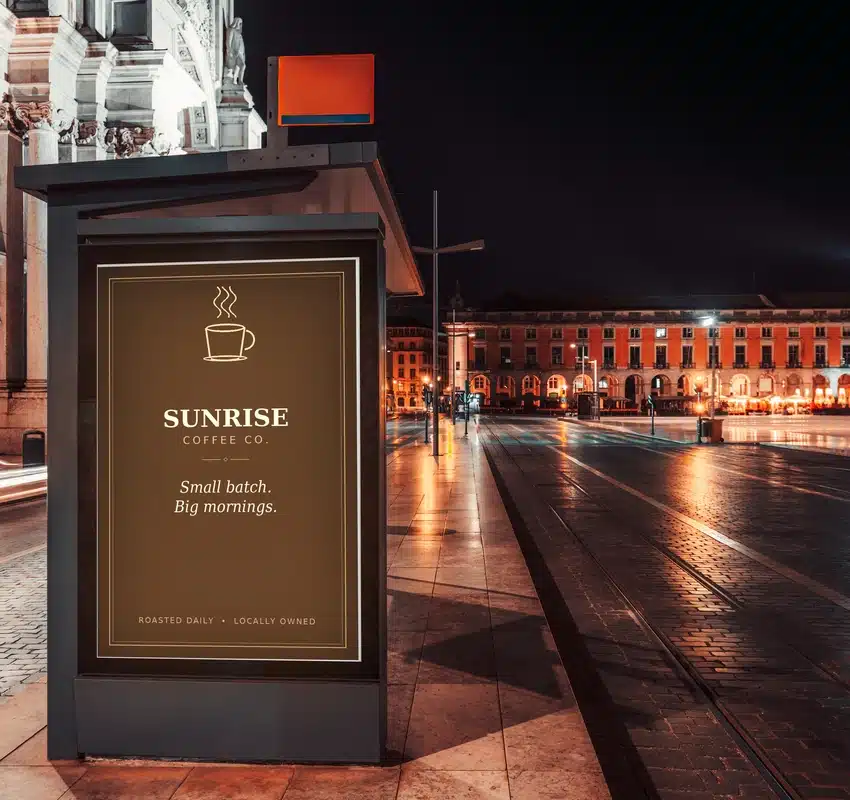
Nike does not need to explain that it makes shoes. A local café may need its messaging to be more immediately clear. A small business slogan should ideally answer two questions at once: what do you offer, and why should customers care? A neighborhood coffee shop could promise an experience with a line such as “Your morning escape, one cup at a time.” A barbershop might emphasize speed and value with something like “Look sharp. Save time.” In both cases, the slogan communicates a practical benefit while giving the business a distinct personality.
A small business can also use local relevance as an advantage. Including a city, neighborhood, customer need, or recognizable local experience can create differentiation that a national brand cannot easily replicate. The key is to keep the message concise. If a slogan is too long to work naturally on a storefront, website, social profile, or other marketing material, it may need to be simplified.
Another useful lesson comes from Walmart’s “Save Money. Live Better.” The slogan connects a practical benefit with a broader aspiration. Small businesses can use the same principle by connecting price, convenience, quality, or service with the outcome customers actually want rather than simply listing features or discounts.
The goal is not to imitate famous slogans. It is to understand the big idea behind them and translate that principle into a message that is specific, believable, and relevant to your own customers.
How to Craft Your Own Great Slogan
Turning lessons from famous slogans into your own phrase is less about inspiration and more about process. A slogan should be simple, short, and memorable, and the path to getting there can be surprisingly methodical.
- Start with positioning: Define what you do, who you do it for, and why you are different. “Shave Time. Shave Money.” could only have come from a positioning insight around the convenience and value of buying razors differently.
- Brain-dump benefit statements: Write down every functional and emotional benefit your product or service delivers. Do not edit yet. Think about what customers gain, how they feel, and what makes the experience different. Getting these ideas on paper gives you material to work with.
- Shorten ruthlessly: Cut every word that does not earn its place. Two to seven words can be a useful starting point, but there is no strict word-count rule. Read each option aloud. If it sounds awkward when spoken, it may be difficult for audiences to remember and repeat.
- Build in distinctiveness: Look at competing brands and identify phrases, claims, and ideas that are already common in the category. Your slogan should sound like it belongs to your brand, not like a generic statement that could appear on any competitor’s advertisement. Avoid familiar territory such as “Quality You Can Trust” unless you can give it a distinctive twist.
- Test with real people: Show your strongest options to people who represent your target audience rather than relying only on colleagues. Ask what they think each slogan means, what type of company they associate with it, and what they remember after some time has passed. If the intended message is unclear, revise it.
- Check how it works in practice: Put the slogan into realistic applications such as an advertisement, website header, social profile, packaging, or storefront. A strong slogan should sound natural when spoken and remain clear when seen in different formats.
The best slogan is rarely the first phrase you write. Start with a clear positioning idea, explore the benefits, remove unnecessary words, test the strongest options, and keep refining until the phrase is simple, distinctive, relevant, and easy to remember.
Lessons from the Greatest Slogans of All Time
Looking across “Just Do It,” “Maybe She’s Born With It. Maybe It’s Maybelline,” “The Happiest Place on Earth,” and “Democracy Dies in Darkness,” a few patterns hold:
- Be specific: Generic lines are easily forgotten. Distinctive language and a clear idea give a slogan a better chance of standing out.
- Choose one core emotion: Aspiration, joy, belonging, confidence, or urgency can all be powerful. Trying to communicate several emotions at once can weaken the message.
- Use everyday language: Simple, familiar words are usually easier to understand, repeat, and remember than jargon or complicated phrasing.
- Make the audience the hero: “Just Do It” gives people a sense of action and possibility, while L’Oréal’s “Because You’re Worth It” puts the consumer at the center of the message.
- You do not have to mention the product: Many iconic slogans, including “Just Do It,” “Think Different,” and “Do What You Can’t,” never directly describe what the brands sell. Instead, they communicate a broader identity or attitude that becomes associated with the brand.
Apple’s “Think Different” appeals to creativity and individuality without mentioning a computer. This demonstrates how a slogan can create associations that extend beyond a product or individual advertisement. When a brand consistently connects a phrase with a distinctive idea, the slogan can become part of the brand’s identity.
The final lesson is to treat a slogan as a long-term brand asset rather than a line created for one advertisement. The most recognizable slogans gain strength through consistent use and reinforcement. A strong idea can last for years when the brand continues to support it with relevant messaging and experiences.
Common Mistakes When Writing Advertising Slogans
Weak slogans are usually forgettable for predictable reasons. Here are some of the most common errors:
- Too vague: “Quality You Can Trust” could apply to a bank, a tire company, or a sandwich shop. Compare that with “There are some things money can’t buy. For everything else, there’s MasterCard,” which communicates a much more specific idea.
- Too long: Brevity generally helps memorability, but there is no strict word-count rule. Longer slogans can work when they have strong rhythm, structure, or a memorable payoff.
- Jargon-heavy: Technical or formal language can make a slogan harder to understand and remember. Simple, conversational wording such as “Finger Lickin’ Good” is often more accessible.
- Tone mismatch: A serious or urgent message that works for a newspaper may feel inappropriate for a snack or fashion brand. The slogan’s tone should match the brand, audience, and category.
- Ignoring context: A slogan that reads well on paper may lose its impact on a billboard, disappear in a social feed, or sound flat when spoken. Test how the phrase works across the formats where it will appear.
- Changing too often: If a brand replaces its slogan every few months, it has less opportunity to build a lasting association. Consistent use over time can strengthen recognition and brand equity.
The goal is not to follow a rigid formula. A strong slogan should avoid unnecessary complexity while remaining clear, distinctive, relevant, and closely connected to the brand.