

Anti-Targeting
While at the helm of Gourmet Ads, I’ve been running Supermarket Advertising for nearly two decades. I first wrote about the idea of focusing on new customers rather than solely existing ones back in 2010, 15 years ago. Since then, across every programmatic deal, every DSP setup, every managed campaign for a supermarket, there has been one constant: we have never run a campaign for a supermarket that specifically excluded a first party audience. Not once.
Exclusion has always been the quiet engine behind true incremental reach. Yet in the broader supermarket industry, this simple idea is massively underused.
Supermarkets today sit on some of the most valuable first party databases anywhere. Every scanned basket, every digital coupon, every app session contributes to an incredibly rich understanding of shopper behavior. But the power of that data is often pointed inward instead of outward.
And that is where the opportunity gets lost. The supermarket industry is complicated, with a vast network of businesses, multiple data sources, and intricate supply chains, making it challenging to implement straightforward strategies like anti-targeting. Having a robust system in place to manage and integrate these data sources is essential for effective anti-targeting.
On top of these operational hurdles, implementing even the most straightforward strategies like anti-targeting requires careful attention to privacy and data collection rules, adding another layer of complexity.
Key Takeaways
- With Anti-Targeting, we focus on new customers and try to avoid the customers that are already in our first party data.
- When we use Anti-Targeting techniques via paid media, we focus exclusively on acquiring new customers.
- Supermarkets already know who their loyal shoppers are; the real advantage is confidently excluding them to unlock incremental reach.
- Anti-Targeting supports privacy expectations by limiting unnecessary exposure and using first-party data responsibly.
- Separating Audiences improves attribution, reduces channel overlap, and aligns each channel with the job it does best.
What is Anti-Targeting?
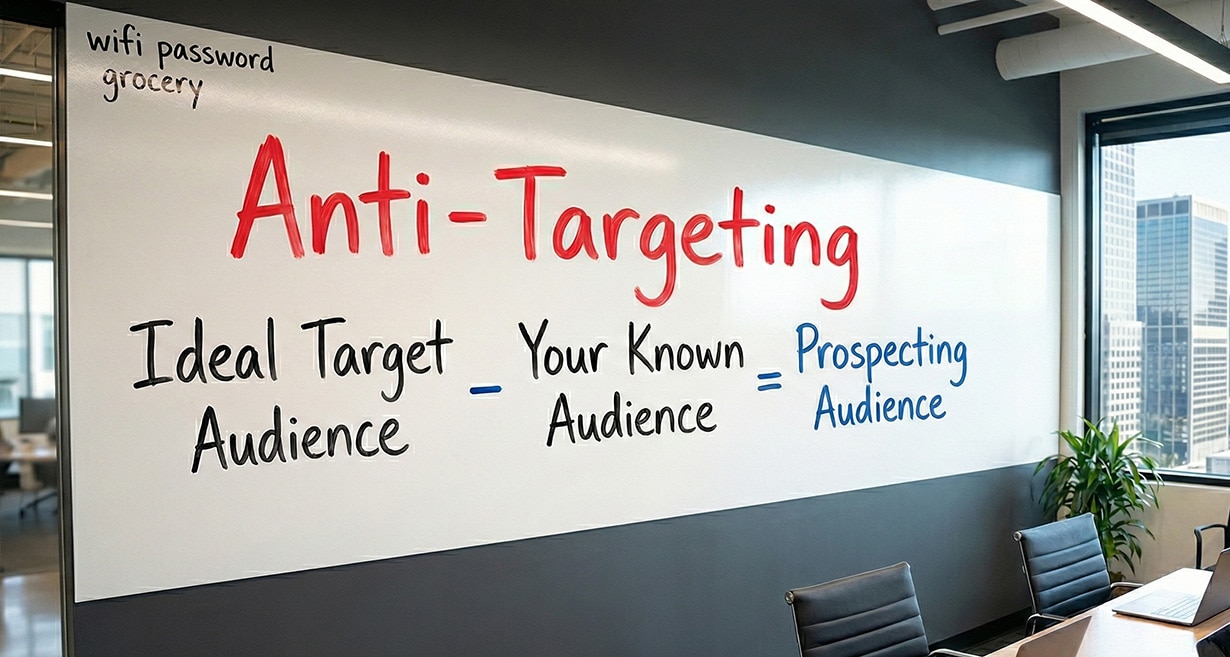
I needed to come up with a term that described this strategy, so I called it Anti-Targeting. The terms used in anti-targeting strategies are important for setting clear policies and expectations.
Anti-targeting is the deliberate and strategic decision to exclude your known first party audiences, who are your first party audiences. They are the loyalty card members, weekly shoppers, app users, email subscribers, and long time customers who already have an established relationship with your supermarket. These customers identify themselves every time they scan their loyalty card, open your app, click your emails, or redeem personalized offers. They are already inside your ecosystem. Anti-targeting is most effective in the context of campaigns where supermarkets want to focus on acquiring new customers rather than retaining existing ones. Our top priority is getting new customers in this type of marketing campaign. Anti-targeting strategies must also account for privacy and data collection rules in other countries, especially for supermarkets operating internationally.
Understanding Customer Behavior and Collecting Information
In today’s competitive grocery landscape, understanding customer behavior is the foundation of any successful pricing and sales strategy. For supermarkets and grocery stores, knowing what drives customers to buy, what influences their preferences, and how they interact with your website or in-store experience is essential for delivering low prices, optimizing promotions, and increasing total sales.
Industry data shows that the average household in the US spends $170 per week on groceries, with a significant portion of their disposable income dedicated to food purchases. In Canada, grocery stores that have invested in understanding customer preferences and purchasing habits have discovered that tailoring pricing and promotions to local needs can dramatically improve both customer satisfaction and ROI. In fact, 67% of shoppers say they are more likely to buy from retailers that consistently offer low prices, while 56% are driven to repurchase after a personalized shopping experience.
To collect this valuable information, grocery stores use a mix of digital and traditional methods. Website analytics provide in-depth insights into how customers interact with your online content—tracking which products are viewed, how long shoppers spend on each page, and what drives them to complete a purchase. This data, when combined with in-store purchase history and loyalty program activity, creates a comprehensive view of customer behavior in context.
Surveys and focus groups add another layer, allowing retailers to ask directly about preferences, satisfaction with current prices, and ideas for improving the shopping experience. In addition, CRM systems are now a required tool for any grocery store looking to operate at scale. These systems track every interaction, purchase, and preference, enabling stores to segment their audience and deliver targeted offers that increase the chances of a sale. This additional information helps supermarkets to do proper research and find out the interest of the consumers.
The benefits of this data-driven approach are clear. Grocery stores that use customer insights to guide their pricing strategy and promotional activities consistently see higher sales and improved customer satisfaction. Furthermore, Google Analytics provides information about behavior, demographic information, and device usage. This analysis helps us to find the location and preferences of the customer. Industry experts believe that companies leveraging data-driven marketing achieve an average ROI of 5:1, far outpacing those that rely on guesswork or outdated methods.
By continually collecting and analyzing customer data, supermarkets can quickly adapt to changing preferences, introduce new food categories, and provide the kind of personalized experience that keeps customers coming back. Whether it’s adjusting prices to match local demand, launching targeted sales, or refining the website experience, the ability to understand and act on customer behavior is what sets leading grocery stores apart.
In summary, investing in customer data collection isn’t just about tracking numbers—it’s about building a strategy that puts customer satisfaction, competitive pricing, and sales growth at the center of your business. For grocery stores in Canada and beyond, this approach is no longer optional; it’s the key to operating successfully in a rapidly evolving industry.
Using Paid Media to Acquire New Customers
Obviously, I do not want to stop advertising to your first party audiences, but the communication should be completely different. These are not shoppers so you need to chase through paid media. They are shoppers you nurture through personalized and one-to-one channels. This technique is especially useful for new convenience stores to introduce themselves in the market.
Your loyalty members, app users, and regular shoppers respond best to tailored rewards, personalized offers, product recommendations, and messages based on their purchasing behavior. It’s essential to treat these valuable customers with personalized care and attention, making them feel appreciated and building long-term relationships. Members interact with your digital platforms, such as your website and app, generating valuable interaction data that can be used for more personalized communication. These communications belong in the channels you fully control, such as email, SMS, your app, push notifications, your weekly catalogue, or your own retail media placements. Users should have the option to opt in or out of certain communications, and obtaining clear consent is essential for privacy compliance. Many supermarkets have developed privacy policy guidelines for consumers so that consumers may opt out of the new promotions if they want. These channels are built for retention and they are incredibly effective at it.
Paid media, however, should not be doing that job. Paid media is your acquisition engine. It is the lever that finds households outside your loyalty base. It is the way you expand your footprint into new suburbs, reach competitors’ shoppers, or introduce your brand to families that are not yet in your ecosystem. Managing customer account information securely within your loyalty program is important for both convenience and compliance.
When you continue targeting your existing customers with paid campaigns, you blur the roles of your channels. You ask paid media to do something your owned channels already do better, while starving your acquisition efforts of the budget they need. Anti-targeting fixes this misalignment. It separates retention from acquisition and ensures each channel plays to its strength.
So you never stop advertising to your first party audiences. You simply speak to them differently, in the right place, with the right type of message, while reserving your paid media for the people who do not yet know you. This is the combination that drives true growth. These types of marketing campaigns will enhance your clients.
What Type of Campaigns Work Best for Customer Acquisition
The most effective customer acquisition campaigns remove friction, offer immediate value, and give new customers a compelling reason to trial your supermarket for the first time. Supermarkets can also sell exclusive or limited-time offers to new customers, creating urgency and driving trial. Offering a variety of activities, in addition to core benefits, can further engage new customers. Taking steps to personalize offers and adding opportunities for customers to earn rewards increases their chance of becoming loyal customers. The following ideas focus on lowering entry barriers, showcasing your strengths, and creating early momentum that turns first time shoppers into long term customers.
Campaign Ideas for Supermarkets with Annual Membership Programs
If your supermarket membership program is operated either independently or as part of a larger retail group, the fastest way to acquire new customers is to lower the barrier to entry. Membership fees create friction, especially for households who have never shopped with you before. The campaigns below are designed to remove that friction and give first time shoppers an immediate reason to choose your supermarket over a competitor.
1. Waive the First Year of Membership Fees
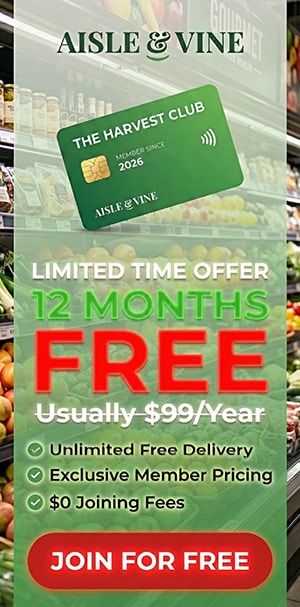
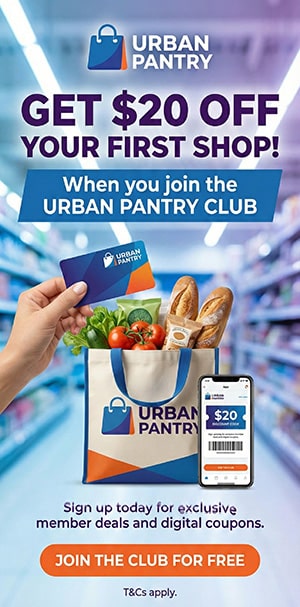
This is the simplest and strongest offer for new customer acquisition. For a household that has never trialed your supermarket, the idea of a free twelve month membership instantly removes the biggest psychological barrier. The offer can be positioned around access to member pricing, fuel discounts, free delivery on online orders, or exclusive promotions. The specific benefits offered may vary depending on the member’s status or purchase history. The messaging is not about savings; it is about risk free entry.

2. Membership Fee Paid but Matched with Store Credit
An alternative is to allow new customers to pay the annual fee but give the full amount back plus more as a credit to spend in store. In some cases, new members may be required to make a purchase or buy specific products to access certain benefits. The price of membership should be clearly communicated, highlighting how the value received compares favorably to the cost. This makes the membership feel less costly. New customers often convert quickly because the credit can be framed as an immediate benefit.


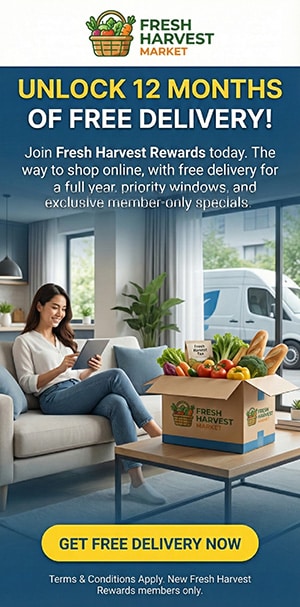
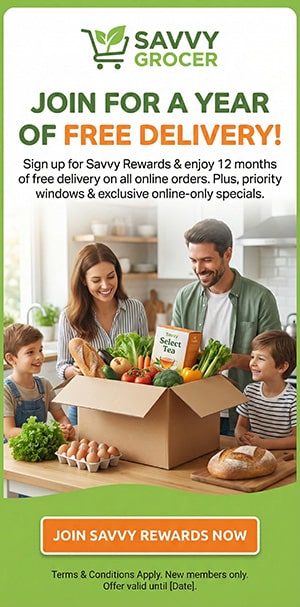
3. Join and Receive Free Delivery for Online Orders for Twelve Months
For supermarkets with strong e-commerce programs, offering free delivery for a full year is one of the most compelling incentives you can give to new customers. Free delivery is especially attractive to family households who value convenience and time savings. It removes the single biggest barrier to online grocery shopping, which is the delivery fee itself, and instantly positions your supermarket as the easiest place to shop.
You can strengthen this offer with priority delivery windows, faster fulfilment guarantees, or early access to online only specials, such as exclusive online sales and access to special merchandise. Highlighting popular grocery items like tea as part of these exclusive offers can further incentivize new customers to try the service, while creating a sense of belonging and loyalty.
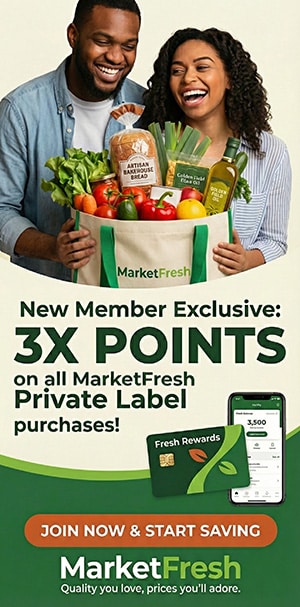
4. Membership Combined With a Significant Boost Such as Double or Triple Points
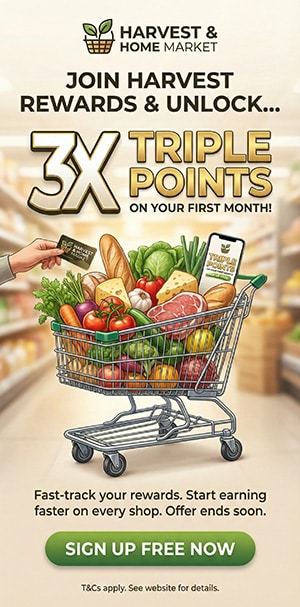
For supermarkets with points based loyalty programs, doubling or tripling points for the first month creates a powerful accelerator effect. New members can increase their points by adding activities such as leaving reviews or participating in events, further enhancing their membership benefits.
These programs give members the chance to win exclusive rewards or benefits, making the experience more engaging. New members can receive a significant percentage increase in points or rewards—sometimes up to 200% or 300%—highlighting the tangible benefits of joining early. This early boost not only drives repeat visits quickly but also encourages new customers to explore more categories.
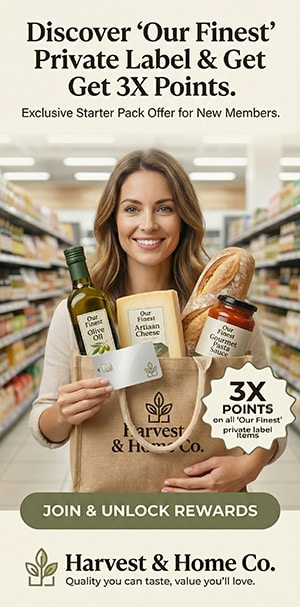
5. Bonus Points for Private Label Purchases
Private label is one of the strongest acquisition tools in grocery, so bundling best selling products into attractive starter packs for new members is an easy way to show the result. Immediately showcase what your supermarket does best. Private label products are often sold as exclusive items, helping customers save money while enjoying quality alternatives to national brands.
You can strengthen this even further by offering double or triple points on private label purchases, making the value instantly clear and encouraging new households to explore products they may not have tried before. These offers not only drive trial but also help customers save more money on their weekly shop. This accelerated reward effect builds momentum quickly and helps move private label items into their regular weekly basket much faster.
6. Membership Fee With Bonus Fuel Vouchers
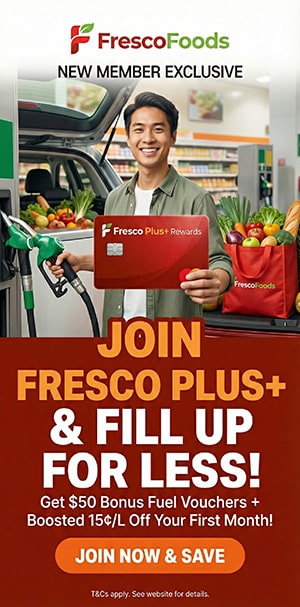
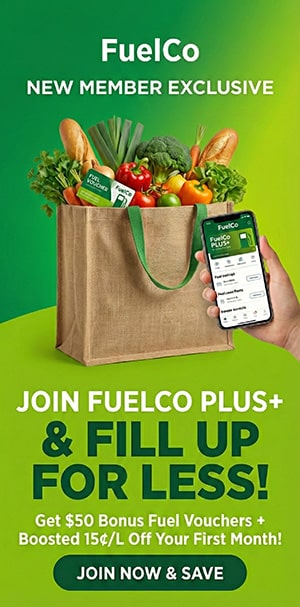
If fuel is part of your broader ecosystem, pairing membership with generous fuel vouchers is an extremely attractive acquisition tool. There is a strong association between fuel savings and supermarket membership, as members directly benefit from exclusive fuel discounts that add tangible value to their everyday lives. Petrol costs are predictable and unavoidable for most households, especially families in suburban or regional areas, which makes fuel savings feel real and valuable.
The depth of benefits provided by the program, such as detailed tracking of individual fuel savings and usage, enhances the overall member experience. Additionally, the membership program involves exchanges of value and data between the supermarket and its members, ensuring mutual benefit and compliance with privacy standards. Using clear words to communicate the benefits and terms of the program is essential to help potential members understand exactly what they will receive and how the program works. Offering boosted cents per liter discounts or multiple fuel vouchers in the first month creates a strong reason to join, and it immediately ties your supermarket membership to a daily life benefit that shoppers appreciate and use often.
Measuring Success: Total Sales and Revenue
For supermarkets and grocery stores, understanding the true impact of a loyalty program means looking beyond sign-ups and focusing on what matters most: total sales and revenue. The most successful programs are those that are driven by data, with CEOs like Jeffrey Zhou emphasizing the importance of trust, transparency, and compliance in data collection strategies. Marketing teams, alongside executive leadership, closely track how loyalty initiatives affect average purchases, customer satisfaction, and overall ROI.
Average Sales per Customer as a Core Metric
One of the clearest indicators of a program’s effectiveness is the average increase in sales per customer. Industry reporting shows that when loyalty programs are paired with competitive pricing and exclusive member discounts, total sales can rise by as much as 10% per customer. In Canada, for example, grocery stores that offer members-only prices and early access to new products have discovered a 15% lift in sales, proving that the right pricing strategy can quickly translate into revenue growth. As a reference, executive statements from leading retailers consistently highlight the direct link between loyalty program enhancements and improved customer engagement.
The Proven Impact of Rewards Programs on Sales Growth
Many researchers believe that supermarket sales have increased from 12 to 18% due to the reward programs because customers who use these reward programs become the loyal customers of the supermarket. The New York Times, using surveys from PayPal data, shared that supermarket loyalty programs are an amazing strategy of supermarkets. The reasons New York Times shared is that these loyalty programs increase sales and improve customer retention.
Customer Experience as a Revenue Driver
But it’s not just about prices. The customer experience plays a major role in driving satisfaction and retention. Grocery stores that operate loyalty programs with perks like free delivery, personalized content, and tailored recommendations on their website see higher engagement and a 20% increase in sales from members. When customers feel their preferences are recognized and rewarded, they are more likely to make repeat purchases and remain active within the program. Ryan Jones, a marketing manager, underscores the importance of leveraging first-party data and ensuring privacy compliance to maximize the effectiveness of these data driven programs.
Retention Gains in the Food and Grocery Sector
The food industry, in particular, has found that loyalty programs offering rewards on everyday purchases and exclusive access to new products can boost customer retention by up to 25%. Early access to sales, special pricing on food and household items, and seamless delivery options all contribute to a positive experience that keeps members coming back. According to the Food Marketing Institute, programs that provide personalized content and recommendations can drive a 30% increase in sales, highlighting the value of using data to tailor offers and communications.
Pharmacies and grocery stores alike have seen similar results. A pharmacy that operates a loyalty program with exclusive discounts on purchases can expect a 10% increase in sales, while grocery stores that focus on low prices and member-only deals consistently outperform competitors in both total sales and customer satisfaction.
Measuring What Matters for Long-Term Growth
Ultimately, measuring the success of a loyalty program comes down to tracking the right metrics, like average sales per customer, retention rates, customer satisfaction, and ROI. By continually optimizing pricing, content, and member benefits, supermarkets can ensure their loyalty programs are not just operating, but actively driving growth, increasing total sales, and enhancing long-term customer loyalty.
Summary
Anti-targeting is not about turning away from your loyal shoppers. It is about recognizing that different audiences require different approaches and ensuring each channel plays the role it is best suited for. Your first party audiences should be nurtured through the personalized, one to one communication channels you already control, while your paid media investment should be directed toward the households you have not reached yet. When you differentiate in this way, your messaging becomes clearer, your budgets work harder, and your growth becomes more predictable.
Supermarkets have access to some of the richest first party data in the world, but its greatest strength is not only in who you can target. Its strength also lies in who you can confidently exclude so your acquisition campaigns can reach households who are not yet part of your weekly rhythm.
Most supermarkets still blend acquisition and retention together, which leads to muddled messaging and inefficient spend. Anti-targeting fixes this by creating a clean separation between talking to the shoppers you already have and engaging the ones you do not. As privacy evolves and customer expectations shift, the supermarkets that master this balanced approach will be the ones that continue to grow sustainably.
Differentiating your communication in this way is not just smart marketing. It is the foundation for building the next generation of loyal supermarket customers.